
Why Stiff Muscles Are Holding You Back (And What to Do About It)
Simple stretching exercises at home are one of the easiest ways to feel better every day — no gym, no equipment, no commute required.
Here’s a quick-start overview:
- Calf stretch – Stand at a wall, press back heel down, hold 30 seconds each side
- Hamstring stretch – Sit or lie down, extend one leg, reach toward your foot, hold 30 seconds
- Quad stretch – Stand and hold one foot behind you, hold 30 seconds each leg
- Knee-to-chest stretch – Lie on your back, pull one knee in, hold 30 seconds each side
- Shoulder stretch – Pull one arm across your chest, hold 30 seconds each side
- Neck tilt – Tilt your ear toward your shoulder, hold 15-30 seconds each side
- Cat-Cow stretch – On all fours, alternate arching and rounding your back, 8-10 reps
- Child’s pose – Kneel and lower your chest toward the floor, hold as long as comfortable
Key rules: Warm up with 5-10 minutes of light movement first. Hold each stretch for 30 seconds. Repeat 2-4 times per side. Stretch 2-3 days per week minimum.
Most busy people skip stretching because it feels optional. It isn’t.
Tight muscles from sitting at a desk all day don’t just feel uncomfortable — they quietly cause problems. Poor posture. Low back pain. A higher chance of getting injured doing everyday things like climbing stairs or carrying groceries.
The good news? You don’t need a lot of time. Research shows a 5- to 10-minute stretching routine done consistently can improve flexibility, reduce muscle tension, and make daily movement feel easier. One physical therapist puts it simply: stretching is a lot like flossing — you know it’s good for you, and it doesn’t take long, but most people don’t make it a habit.
This guide makes it easy to start.

Why You Need Simple Stretching Exercises at Home
We often think of stretching as something only athletes do before a big game. In reality, simple stretching exercises at home are essential for anyone who wants to move through life without constant “creaks” and “cracks.” When we remain sedentary—like sitting at a desk for eight hours—our muscles actually begin to shorten and tighten. This leads to a limited range of motion in our joints, making it harder to do basic things like reaching for a plate in a high cupboard or checking your blind spot while driving.
According to A guide to basic stretches – Mayo Clinic, regular stretching increases your flexibility and improves the range of motion of your joints. This isn’t just about being able to touch your toes; it’s about functional health. Better flexibility protects you against injury and aids in daily activities. If you are just starting your fitness journey, check out our guide on Staying Fit at Home: Workouts for Beginners to see how stretching fits into a larger routine.
The benefits of stretching include:
- Improved Blood Flow: Stretching increases blood flow to your muscles, which can speed up recovery after physical activity.
- Back Pain Relief: Tight hamstrings and hip flexors are often the hidden culprits behind chronic lower back pain.
- Posture Correction: Stretching the chest and shoulders helps reverse the “slump” caused by looking at phones and computers.
- Injury Prevention: Flexible muscles are less likely to tear when put under sudden stress.
The Difference Between Static and Dynamic Stretches
Not all stretches are created equal. Knowing when to use which type is the secret to a safe routine.
Static Stretching involves holding a single position for a set period, usually 30 seconds. This is what most of us think of when we imagine stretching. It is best used after a workout or at the end of the day because it helps the muscles relax and lengthen. As noted in A Daily 5-Minute Stretching Routine That Everyone Needs – Healthline, holding these positions allows your nervous system to let go of muscle “grip.”
Dynamic Stretching, on the other hand, involves active movements where the joints and muscles go through a full range of motion. Think of shoulder rolls or leg swings. These are fantastic for warming up because they “wake up” the muscles and get the blood pumping without over-extending a cold muscle.
Simple Stretching Exercises at Home for Beginners
If you haven’t touched your toes since the Clinton administration, don’t worry. Simple stretching exercises at home can be modified for any fitness level. You don’t need to be a gymnast to start.
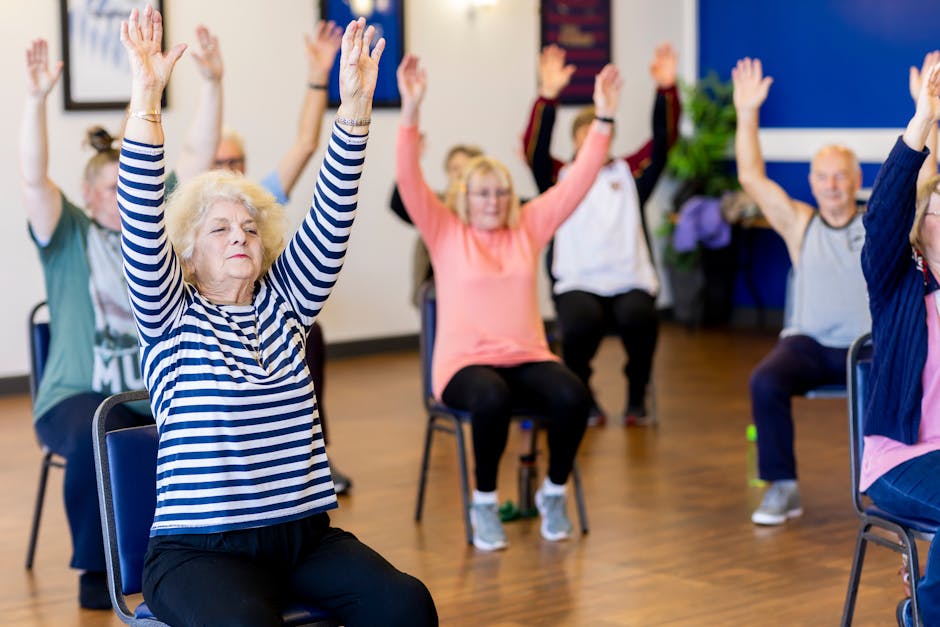
For those with limited mobility or seniors, chair-based options are a lifesaver. You can perform neck tilts, shoulder stretches, and even hamstring stretches while seated firmly in a sturdy chair. This reduces the risk of falls while still providing the benefits of increased circulation. If you find that you need a bit of extra help, exploring Top Yoga Props for Beginner Yogis can provide ideas for using straps or blocks to bring the floor closer to you.
How to Stretch Safely to Avoid Injury
The biggest mistake people make is “cold stretching.” Imagine a rubber band that has been in the freezer; if you pull it suddenly, it snaps. Your muscles are similar. You should always perform 5-10 minutes of light activity—like walking in place or doing gentle arm circles—to get your body temperature up before diving into deep stretches.
When you begin your simple stretching exercises at home, keep these safety tips in mind:
- No Bouncing: Avoid “ballistic” stretching. Bouncing can cause small tears in the muscle. Instead, use smooth, slow movements.
- Breathe Through It: It’s common to hold your breath when a stretch feels intense. Don’t! Deep breathing helps your muscles relax.
- Slight Pull vs. Pain: You should feel a gentle tension or a “good” pull. If you feel sharp, stabbing pain, stop immediately.
- Osteoporosis Precautions: If you have osteoporosis, be cautious with “knee-to-chest” or deep spinal twists, as these can increase the risk of compression fractures in the spine.
For a deeper dive into starting safely, read Your First Home Workout: A Beginner’s Guide.
When to Consult a Doctor Before Stretching
While stretching is generally safe, it isn’t for everyone in every situation. You should consult a healthcare professional or physical therapist if:
- You have a chronic condition like heart disease or severe osteoporosis.
- You are recovering from a recent surgery.
- You have an acute injury (like a strained muscle or a broken bone).
- A specific movement causes sharp, radiating pain.
If you have minor stiffness, a Beginner Resistance Band Guide can show you how to use light tension to support your movements safely under professional guidance.
The 10-Minute Routine: 8 Essential Stretches
Ready to move? This routine covers the major muscle groups and takes about 10 minutes. You can do this in your pajamas!
- Neck Tilts: Gently drop your right ear toward your right shoulder. Hold for 15 seconds. Repeat on the left.
- Shoulder Rolls: Roll your shoulders up, back, and down in a circular motion. Do 10 reps.
- Cat-Cow: On all fours, inhale and arch your back (Cow), then exhale and round your spine like a cat. This is great for spinal mobility.
- Child’s Pose: From all fours, sit back on your heels and reach your arms forward on the floor. This is a restorative stretch for the back and shoulders.
- Runner’s Lunge: Step one foot forward into a lunge, keeping the back knee on the floor. This targets the hip flexors, which get incredibly tight from sitting.
- Forward Fold: Stand with feet hip-width apart and slowly fold forward from the hips. Let gravity pull your head toward the floor.
- Quad Stretch: Stand on one leg (hold a wall for balance) and grab your opposite ankle behind you. Keep your knees close together.
- Calf Stretch: Lean against a wall with one foot forward and the other back. Press the back heel into the floor to feel the stretch in your lower leg.
For more quick ideas, see our 10 Minute Daily Workout Routine for Beginners.
Mastering Simple Stretching Exercises at Home
To get the most out of these moves, focus on form over depth. It doesn’t matter if you can’t touch your toes yet; what matters is that you feel the stretch in your hamstrings, not your lower back.
- Hold Times: Aim for 30 seconds per stretch. This is the “magic number” that research suggests is needed for the muscle to actually begin to lengthen.
- Repetitions: Repeat each stretch 2 to 4 times. This cumulative time is what builds long-term flexibility.
- Spinal Alignment: Keep your back flat during forward leans. Rounding the lower back can put unnecessary pressure on your discs.
As suggested in A plan for easy stretching – Harvard Health, consistency is more important than intensity. Stretching every other day is a great start, but daily practice is the goal for maximum benefit.
Frequently Asked Questions About Home Stretching
Stretching seems simple, but we often get asked about the “logistics.” Here is a quick breakdown to help you plan your week.
| Feature | Morning Stretching | Evening Stretching |
|---|---|---|
| Primary Goal | Wake up the body / Reduce stiffness | Relax muscles / De-stress |
| Type Recommended | Dynamic / Gentle movement | Static / Long holds |
| Best Benefit | Improved circulation for the day | Better sleep quality |
| Key Move | Shoulder rolls / Cat-Cow | Child’s Pose / Forward Fold |
How often should I stretch each week?
For real results, you should aim to stretch your major muscle groups at least 2 to 3 times per week. However, just like brushing your teeth, the benefits are cumulative. If you can spare just 5 minutes a day, you will see much faster progress in your range of motion than if you do one long session on Sundays. If you’re short on time, try The Fast 10 Minute Routine for Busy Humans.
When is the best time of day to stretch?
The “best” time is whenever you will actually do it! However, there are specific perks to different times:
- Morning: Great for clearing out that “sleep stiffness.”
- Post-Workout: This is the gold standard. Your muscles are warm, making it the safest time for deep static stretching.
- Before Bed: Helps trigger the “rest and digest” nervous system. Try the 4-7-8 breathing technique (inhale for 4, hold for 7, exhale for 8) while you stretch to maximize relaxation.
For more tips on timing your activity, check out Effective Home Workouts for Beginners.
Can I get a full-body stretch in under 10 minutes?
Absolutely. You don’t need a 60-minute yoga class to feel a difference. A focused 5-minute routine targeting the hips, back, and neck can reinvigorate your body and clear “brain fog” caused by sitting too long. This is especially helpful for desk-bound workers who feel their posture slipping by 2:00 PM. Stretching can even be a secret weapon for weight loss by keeping your body mobile enough to handle more intense exercises—learn more at Simple Exercise Routines for Weight Loss at Home.
Conclusion
At NextFin Capital, we believe that health is the ultimate long-term investment. Incorporating simple stretching exercises at home into your daily life is a low-cost, high-reward habit that pays dividends in the form of better mobility, less pain, and a higher quality of life as you age.
Consistency is the secret sauce. You don’t have to be perfect; you just have to start. Whether it’s a quick neck stretch between meetings or a full 10-minute routine before bed, your future self will thank you for the flexibility.
Ready to take the next step in your fitness journey? Explore more workout routines and find the perfect plan for your lifestyle.
