
Your 1st Day of Gym: What to Expect and How to Walk In Ready
Your 1st day of gym can feel overwhelming — unfamiliar machines, people who seem to know exactly what they’re doing, and no idea where to start. You’re not alone. Research shows that 42% of new gym members quit within the first 30 days, often because they lack a clear plan from the beginning.
The good news? A little preparation goes a long way.
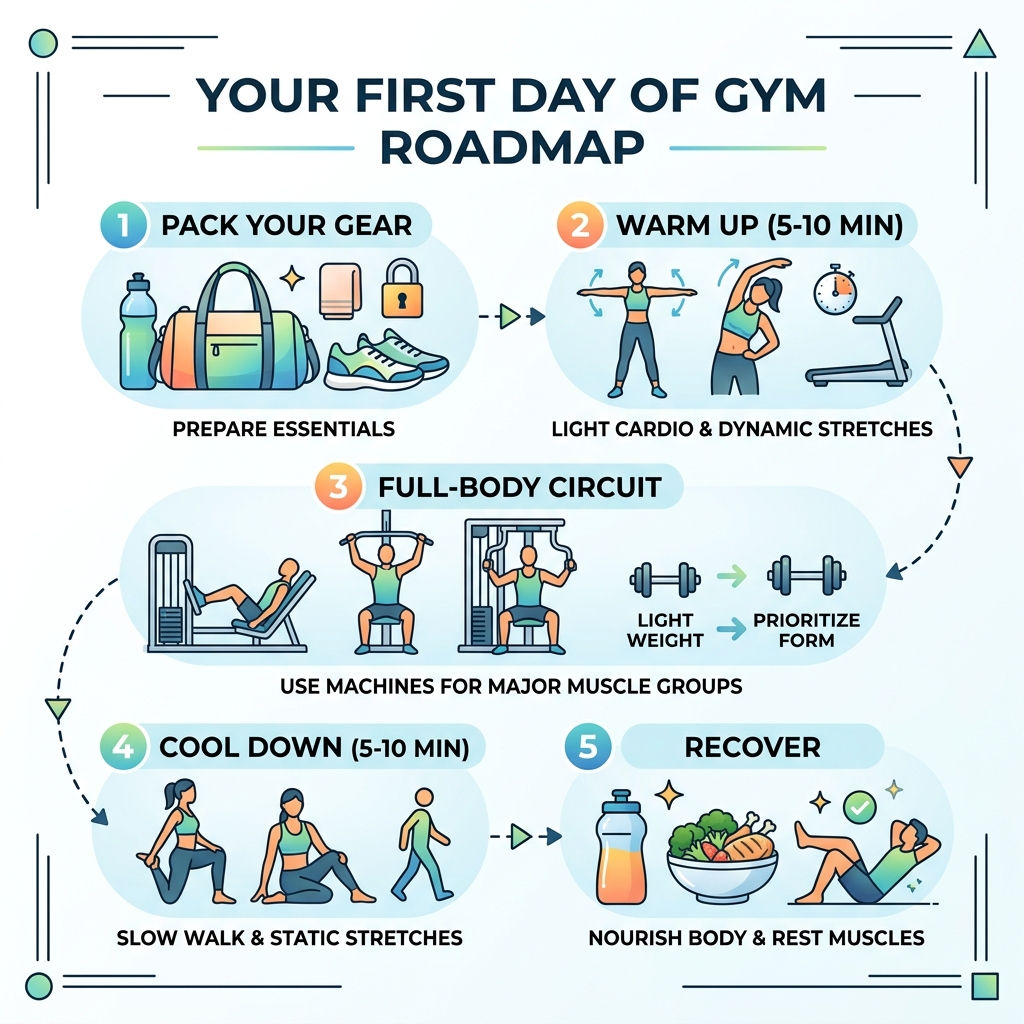
Here’s what to do on your first day at the gym:
- Pack the essentials — breathable clothes, supportive shoes, a water bottle, towel, and a locker lock
- Arrive early — give yourself 10-15 minutes to explore the layout before you start
- Warm up first — 5-10 minutes of light cardio and dynamic stretches
- Follow a simple full-body circuit — focus on machines like the leg press, lat pulldown, and chest press
- Rest 60-90 seconds between sets — keep weights light and prioritize form
- Cool down and stretch — 5-10 minutes of slow walking and static stretches
- Eat protein soon after — help your muscles recover before the soreness kicks in
Most first-timers either try to do too much or freeze up from not knowing where to begin. This guide walks you through everything — from what to pack to what to do when you leave — so you can walk in with confidence and actually come back for day two.
Preparing for Your 1st Day of Gym: Gear and Logistics
Before you even step through the front doors, the battle is won or lost in your gym bag. Walking in underprepared is a surefire way to feel out of place. We recommend gathering your gear the night before so there’s one less barrier between you and your workout.

What to Wear
Comfort is king. Opt for breathable attire made of moisture-wicking fabrics (like polyester or nylon blends) rather than 100% cotton, which absorbs sweat and becomes heavy. For footwear, choose supportive athletic shoes. If you plan on lifting weights, flat-soled shoes provide a stable base, while running shoes are great if you’re sticking to the treadmill or elliptical.
The Essential Packing List
- Water Bottle: Dehydration is the fastest way to kill your energy. Sip throughout your session.
- Microfiber Towel: Most gyms require you to have one to wipe down equipment. It’s also a courtesy to the person using the machine after you.
- Locker Lock: Don’t assume the gym is a fortress. Bring a sturdy combination or key lock for your valuables.
- Pre-Workout Snack: If it’s been more than three hours since your last meal, grab a small piece of fruit or a granola bar 30 minutes before you arrive.
- Personal Hygiene Items: If you plan to shower there, don’t forget flip-flops for the communal stalls and your own soap/shampoo.
Logistically, check the gym’s peak hours. Most facilities are packed between 5:00 PM and 8:00 PM. If you’re nervous about your 1st day of gym, try going during “off-peak” hours—usually mid-morning (10:00 AM to 2:00 PM) or late at night (after 8:00 PM)—to have more space to explore. If you find that the traditional gym environment isn’t for you yet, you might consider setting up your first home gym to build confidence in private.
Navigating the Layout and Essential Gym Etiquette
Every gym has a “flow,” and understanding it will make you feel like a regular in no time. Most modern facilities are divided into specific zones.
Understanding the Zones
- Cardio Zone: Home to treadmills, ellipticals, and stationary bikes. This is a great “safe zone” to start in while you observe the rest of the gym.
- Resistance Machines: These are the large, often pin-loaded machines. They are beginner-friendly because they guide your movement path, reducing the risk of bad form.
- Free Weights Area: This is where you’ll find dumbbells, barbells, and benches. It can be the most intimidating area, so save this for your second or third week.
- Stretching/Functional Space: Usually an area with mats, foam rollers, and medicine balls.
The Unwritten Rules (Gym Etiquette)
Following etiquette is the best way to avoid “looking lost.” Here are the non-negotiables:
- Wipe Down Equipment: Use the provided disinfectant spray or wipes after every set. Nobody wants to sit in your “work.”
- Re-rack Your Weights: If you use dumbbells or plates, put them back exactly where you found them. Leaving weights on the floor is a safety hazard.
- Avoid “Phone Camping”: It’s okay to check your workout log, but don’t sit on a machine scrolling social media for five minutes while others are waiting.
- Share the Space: During busy times, if someone asks to “work in,” it means they want to use the machine while you are resting between sets. It’s polite to say yes.
| Feature | Gym Do’s | Gym Don’ts |
|---|---|---|
| Cleanliness | Wipe down every machine after use | Leave sweat puddles for the next person |
| Equipment | Put weights back in their designated spot | Leave dumbbells scattered on the floor |
| Noise | Use headphones for music/videos | Play audio through your phone speakers |
| Space | Be mindful of others’ “personal bubble” | Stand directly in front of someone using a mirror |
Developing a beginner mindset for exercise involves realizing that everyone—even the most muscular person in the room—started exactly where you are today.
A Simple Workout Routine for Your 1st Day of Gym
Don’t walk in and just start lifting the heaviest thing you see. Your body needs to be primed for the stress of exercise.
The Essential Warm-Up and Familiarization
A proper warm-up serves two purposes: it prevents injury and gives you 10 minutes to “scout” the gym. Start with 5-10 minutes of light cardio (walking at a brisk pace or a light cycle). Follow this with dynamic stretches like arm circles, leg swings, and torso twists.
This window of time is crucial for heart rate elevation and joint mobility. Interestingly, scientific research suggests that both increasing the load (weight) and increasing repetitions lead to similar gains in muscle size and strength over time. On your 1st day of gym, we focus on the repetitions to master the movement. For more ideas on quick starts, check out our 10-minute daily workout routine for beginners.
A Beginner-Friendly Full-Body 1st Day of Gym Circuit
For your first session, we recommend using machines. They are safer and have diagrams on the side explaining how to use them. Aim for 3 sets of 12 reps for each exercise, resting 60-90 seconds between sets.
- Leg Press: Focuses on your glutes, quads, and hamstrings. Keep your feet shoulder-width apart and don’t lock your knees at the top.
- Lat Pulldowns: Targets your back and biceps. Pull the bar down to your upper chest, not behind your neck.
- Chest Press: Works your chest, shoulders, and triceps. Ensure your back stays flat against the pad.
- Seated Rows: Another great back builder. Keep your chest up and squeeze your shoulder blades together.
- Plank Hold: Finish with a core challenge. Hold a solid position for 30 seconds, rest, and repeat twice.
Remember: Form over weight. If you can’t complete 12 reps with “perfect” control, the weight is too heavy. It’s better to lift light and look like you know what you’re doing than to lift heavy with shaky, dangerous form.
Post-Workout Recovery and Avoiding Common Mistakes
Congratulations! You finished the workout. But what you do in the 60 minutes after leaving the gym determines how you’ll feel tomorrow.
The Cool-Down
Unlike the warm-up, your cool-down should involve static stretching. This is where you hold a stretch for 20-30 seconds. Focus on the muscles you just worked—quads, chest, and back. This helps transition your body back to a resting state and may improve flexibility.
Nutrition and Hydration
Your muscles have just been through stress. To help them repair, prioritize:
- Protein Intake: A whey protein shake or a chicken breast helps “patch up” the micro-tears in your muscles.
- Fast-Digesting Carbs: A banana or some white rice helps replenish the glycogen (energy) you burned.
- Hydration: Continue drinking water. If you had a particularly sweaty session, an electrolyte drink can help.
Common Mistakes to Avoid
- Ego Lifting: Trying to impress strangers by lifting too much weight. No one is watching as closely as you think.
- Skipping the Cool-Down: This often leads to increased stiffness.
- Ignoring DOMS: Delayed Onset Muscle Soreness is normal. You will likely feel “heavy” or sore 24-48 hours after your 1st day of gym. This isn’t an injury; it’s your body adapting.
- Overtraining: Don’t try to stay for two hours. A solid 45-60 minute session is plenty for a beginner. If you find the gym too taxing, you can always supplement with effective home workouts for beginners.
Frequently Asked Questions About Starting at the Gym
How do I handle gym intimidation or “gymtimidation” on day one?
“Gymtimidation” is the fear that everyone is judging you. In reality, most people are staring at themselves in the mirror or focusing on their own heart rate. A great tip is to wear headphones—even if you aren’t listening to anything—to create a “private bubble.” Also, the “SQuAD” method works: Show up during slow hours, Quiet your nerves with a warm-up, Ask for help, and Do a short workout.
Should I hire a trainer or join a group class for my first visit?
If your budget allows, a single session with a personal trainer is the best investment you can make. They can show you exactly how to adjust the machines for your height and body type. Group classes are also excellent because they provide a structured “follow the leader” environment where you don’t have to plan the workout yourself.
What should I do if the gym is crowded and the machines I need are taken?
Have a “Plan B.” If the leg press is taken, use the goblet squat with a dumbbell. If the treadmills are full, try the elliptical or the stationary bike. Don’t be afraid to ask someone, “How many sets do you have left?” Most people will be happy to give you an estimate.
Conclusion: Building Consistency Beyond Day One
Your 1st day of gym is a massive victory, but the real magic happens in week four, month six, and year two. After your first session, take five minutes to reflect. Which exercises felt good? Did anything hurt (not just “burn,” but actual pain)? Use these insights to plan your next visit.
Setting realistic goals—like going three times a week for 30 minutes—is much better than aiming for six days a week and burning out. Track your energy levels and celebrate the small wins, like finally figuring out how to adjust that one stubborn seat on the row machine.
At NextFin Capital, we believe that physical health is the foundation of a productive life. By mastering the gym, you’re investing in your most valuable asset: yourself. Ready for more? Explore more workout routines to keep your momentum going and turn that first-day curiosity into a lifelong habit.
