
Why a 10-Minute Workout for Beginners Works
A 10-minute workout for beginners is one of the fastest ways to build a real fitness habit – no gym, no equipment, and no experience needed.
Here’s what a simple beginner routine looks like:
- Warm-up (2 min) – March in place, shoulder rolls, hip circles
- Bodyweight squats (40 sec work / 20 sec rest)
- Incline push-ups (40 sec work / 20 sec rest)
- Reverse lunges (40 sec work / 20 sec rest)
- Marching plank (40 sec work / 20 sec rest)
- Bird dog (40 sec work / 20 sec rest)
- Cool-down (1 min) – Light stretching and deep breathing
No equipment. Just your bodyweight and a small patch of floor.
Most people think they need an hour at the gym to see results. They don’t. Short, consistent sessions beat long, occasional ones every time. Even a 10-minute session raises your heart rate, boosts your metabolism, lifts your mood, and starts building real strength.
According to public health guidelines, adults should aim for at least 150 minutes of moderate activity per week. Done a few times a day, 10-minute sessions can get you there – without clearing your schedule. You can review the official recommendations from the World Health Organization physical activity guidelines.
The barrier to starting isn’t fitness level. It’s feeling like you don’t have enough time. This guide removes that excuse entirely.

Basic 10-minute workout for beginners glossary:
We often hear that exercise has to be a grueling, hour-long ordeal to “count.” Science tells a different story. Research into high-intensity movements shows that even brief bursts of activity can significantly improve heart health and metabolic function. When we commit to a 10-minute workout for beginners, we aren’t just burning a few calories; we are signaling to our bodies that it is time to wake up.
Short workouts are incredibly effective for building consistency. It is much easier to talk ourselves into ten minutes of movement than an hour-long commute to a fitness center. Over time, these small “micro-workouts” stack up, leading to better posture, increased stamina, and a more resilient immune system. By lowering the barrier to entry, we make fitness a permanent part of our lifestyle rather than a temporary chore.
Preparing for Your Routine
Before we jump into the movements, we need to set the stage. The beauty of a 10-minute workout for beginners is its simplicity. You don’t need a fancy membership or a rack of weights. However, a little preparation goes a long way in preventing injury and keeping us motivated.
First, find your space. You only need enough room to take a big step in any direction and lie down comfortably. A living room, a bedroom, or even a quiet corner of the office works perfectly. If you have a yoga mat, great! If not, a carpeted floor or a firm towel will do just fine.
Next, think about hydration. Even in ten minutes, our bodies use up resources. Have a glass of water nearby to sip on afterward. Most importantly, we want to focus on “stacking” this new habit. Try doing your routine at the same time every day—perhaps right after you brush your teeth or during a lunch break.
To dive deeper into setting up your space and mindset, check out our 10-minute daily workout routine for beginners, or see how we handle the fast 10-minute routine for busy humans. For a broader look at starting from scratch, read our home workouts for beginners: a comprehensive guide.
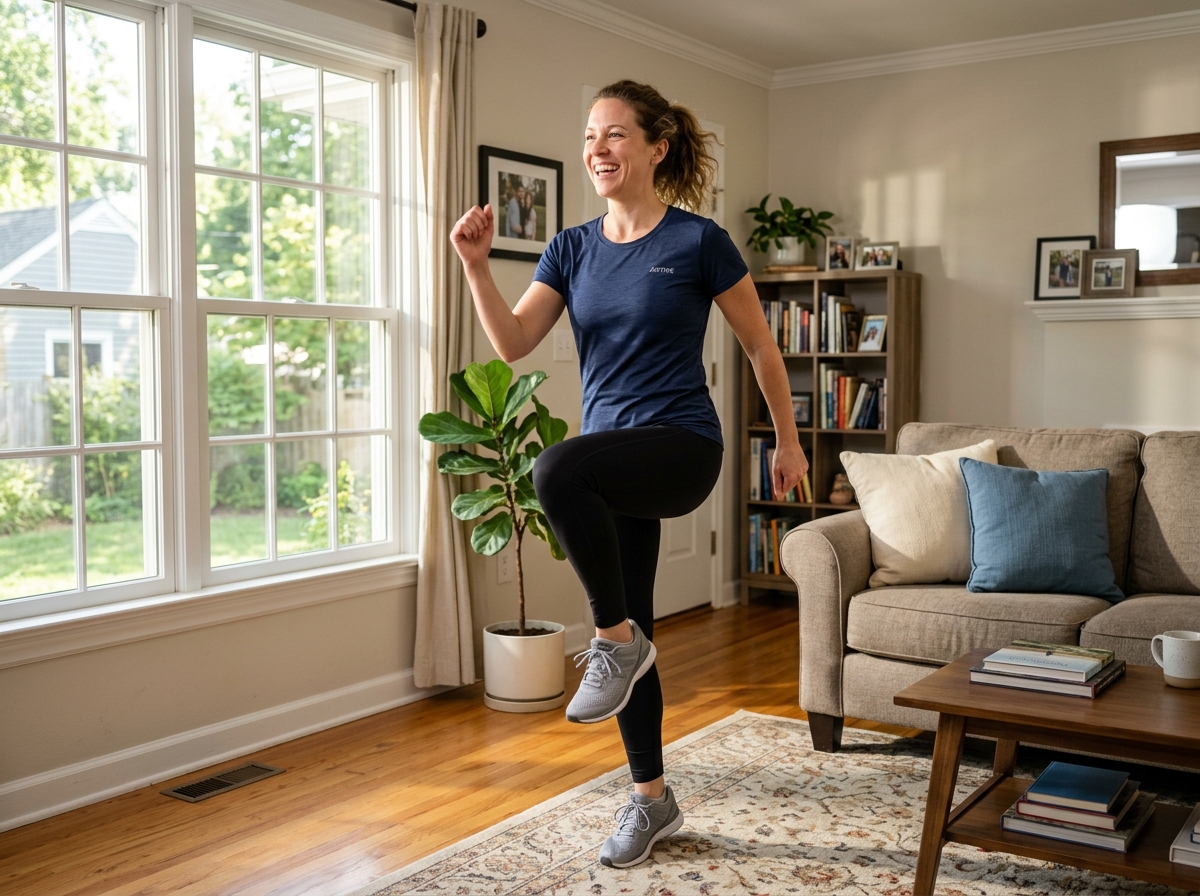
The 2-Minute Warm-Up
We never want to go from “zero to sixty” without warming up the engine. A warm-up raises our muscle temperature and increases blood flow, which keeps our joints lubricated and ready for action. Spend about 30 seconds on each of these four moves:
- Marching in Place: Lift your knees high and swing your arms. This gets the heart rate climbing gently.
- Shoulder Rolls: Roll your shoulders up, back, and down. Most of us carry tension here from sitting at desks, so let’s loosen it up.
- Torso Twists: With your feet planted, gently rotate your upper body from side to side. Keep your core engaged to protect your spine.
- Hip Circles: Imagine you are using your hips to draw a large circle on the floor. This opens up the pelvic area, which is crucial for squats and lunges.
The Ultimate 10-Minute Workout for Beginners Routine
Now that we are warm, it’s time for the main event. We are going to use a circuit-style format. This means we move from one exercise to the next with short rest periods in between. This structure keeps our heart rate in the “aerobic zone,” which is fantastic for building stamina and burning fat.
For more detailed breakdowns of these movements, you can always refer to the beginner’s manual to home workouts.
Essential Exercises for Your 10-Minute Workout for Beginners
We have selected five exercises that target every major muscle group in your body. These are “functional” moves, meaning they help you in real life—like when you’re picking up groceries or climbing stairs.
- Bodyweight Squats: Stand with feet shoulder-width apart. Sit your hips back as if you’re sitting in an invisible chair. Keep your chest up and drive through your heels to stand back up. Beginner Tip: If your balance feels off, do these in front of a real chair and just tap your glutes to the seat.
- Incline Push-ups: Traditional floor push-ups are tough! Start by placing your hands on a sturdy elevated surface like a kitchen counter or the back of a sofa. Keep your body in a straight line from head to heels as you lower your chest and push back up.
- Marching Plank: Get into a plank position (either on your hands or elbows). Slowly lift one foot off the ground, hold for a second, then switch. This forces your core to stabilize against the movement.
- Reverse Lunges: Stand tall, then take a big step backward with one foot. Lower your back knee toward the floor (it doesn’t have to touch!). Push off your front foot to return to standing. This is much easier on the knees than forward lunges.
- Bird Dog: Start on all fours. Simultaneously reach your right arm forward and your left leg backward. Hold for a beat, feeling your core tighten, then switch sides. This is a “low-intensity” superstar for back health.
For more inspiration on low-impact moves, see our guide on staying fit at home: workouts for beginners.
Structuring Your 10-Minute Workout for Beginners
To make this a true 10-minute workout for beginners, we follow a specific timing interval. We recommend 40 seconds of work followed by 20 seconds of rest.
Why 40/20? It gives you enough time to get into a rhythm with the movement but provides a generous rest period to catch your breath. During those 40 seconds, don’t worry about how many repetitions you do. Focus entirely on your form. If you feel your form breaking—like your back arching during a plank—stop, reset, and start again.
If you find 40 seconds too challenging at first, you can drop down to 30 seconds of work and 30 seconds of rest. The goal is to keep moving for the full ten minutes. For more on how to tweak these intervals, check out effective home workouts for beginners.
Cooling Down and Progressing Your Fitness
Once the timer hits ten minutes, don’t just collapse onto the couch! We need to bring the heart rate down gradually. A proper cool-down helps prevent dizziness and reduces muscle soreness the next day.
Spend one minute walking slowly around the room and taking deep, belly breaths. Follow this with some “static” stretches—where you hold a position for 15-20 seconds. Focus on your quads (the front of your thighs), your chest (stretch your arms wide), and your hamstrings (reach for your toes).
You can find a full stretching routine in our guide: your first home workout: a beginner’s guide.
How to Stay Consistent and Level Up
The most important “stat” in fitness is showing up. Doing this 10-minute workout for beginners three times a week is better than doing a two-hour workout once a month.
Once this routine starts feeling easy (usually after 4-6 weeks), you have a few options to “level up”:
- Increase the Intensity: Perform the movements slightly faster while maintaining perfect form.
- Reduce Rest: Try 50 seconds of work and 10 seconds of rest.
- Add Resistance: Hold a water bottle or a small weight during your squats and lunges.
- Repeat the Circuit: If you have the time, do the entire 10-minute block twice for a 20-minute session.
Frequently Asked Questions about 10-Minute Workouts
Do I need any equipment for this routine?
No! This routine is designed to be 100% bodyweight-based. However, as you progress, you might find a yoga mat helpful for floor exercises like the bird dog. A sturdy chair is also great for modifications like incline push-ups or assisted squats.
How often should I do a 10-minute workout?
For total beginners, we recommend starting 2-3 times per week. As your body adapts and your energy levels rise, you can move toward a daily practice. Because these sessions are short, they are safe to do daily once you’ve built a base level of fitness.
When should I consult a doctor before starting?
While a 10-minute workout for beginners is generally low-impact, you should always check with a healthcare professional if you have pre-existing heart conditions, severe joint pain, or are recovering from a recent surgery. If you feel sharp pain (not just muscle tiredness) during any move, stop immediately.
Conclusion
At NextFin Capital, we believe that health is the ultimate investment. You don’t need a massive “capital” of time or money to start seeing a return on your well-being. By committing to just ten minutes a day, you are laying the foundation for a longer, more energetic, and more vibrant life.
Consistency is the secret sauce. Don’t worry about being perfect; just worry about being present. Start your journey today, and remember that every expert was once a “total newbie.”
For more routines and tips to keep your momentum going, visit our Workout Routines Pillar Page.
