
You Don’t Need a Gym to Get Strong — Here’s Your Complete At Home Workout Plan with Dumbbells
An at home workout plan with dumbbells is one of the most effective ways to build muscle, burn fat, and get stronger — without a gym membership or expensive equipment. Here’s a quick snapshot of what works:
Quick-start guide:
- Train 3 days per week (Monday, Wednesday, Friday) for beginners
- Use 8-12 reps per set for muscle building
- Start with compound moves — squats, rows, presses, deadlifts
- Rest 60-90 seconds between sets
- Add weight or reps when your current weight feels easy for 2 sessions in a row
- Follow a 12-week program split into phases: technique → intensity → strength
That’s the core of it. But how you put it all together matters a lot.
If you’re a busy professional with limited time, the good news is that a solid dumbbell session can take as little as 25 to 45 minutes. No commute. No waiting for equipment. Just results.
Dumbbells are also surprisingly versatile. Research shows that free-weight exercises like dumbbell presses and rows can trigger similar muscle growth to machine-based training — as long as your effort and consistency are there. And unlike machines, dumbbells force your stabilizing muscles to work harder, which builds more functional, real-world strength.
Whether you’re starting from zero or looking to level up, this guide walks you through everything — from choosing the right weights to following a structured 12-week plan.

Why an At Home Workout Plan with Dumbbells Works
We often hear that you need a massive squat rack or a room full of cable machines to see real progress. That simply isn’t true. An at home workout plan with dumbbells works because the body doesn’t know the difference between a $5,000 machine and a piece of iron in your garage; it only knows resistance and tension.
Dumbbells offer a superior range of motion compared to barbells or machines. Because your hands aren’t fixed in one position, you can move through a more natural path, which is often friendlier on the joints. Furthermore, because you have to balance two separate weights, your stabilizing muscles are constantly firing. This leads to better functional strength that carries over into real-life activities, like carrying heavy groceries or lifting your kids.
For those just starting out, check out the ultimate guide to beginner home workouts to see how dumbbells fit into a broader fitness strategy. If you want a general overview of how strength training supports muscle growth and health, the Mayo Clinic’s strength training guide is a useful external resource.
Benefits Over Machines
While gym machines have their place, dumbbells offer unique advantages for the home trainee. First, they allow for unilateral training-working one side of the body at a time. This is crucial for identifying and fixing strength imbalances (like a dominant right arm doing all the work).
Second, dumbbells require significant core engagement. Even a simple standing overhead press becomes a core workout because your abs must stabilize your spine against the moving weights. This makes effective home workouts for beginners much more efficient, as you’re hitting multiple goals at once.
Addressing Muscle Imbalances
One of the biggest “secret weapons” of an at home workout plan with dumbbells is its ability to create symmetry. Machines often mask weaknesses because your stronger side can compensate for your weaker side. With dumbbells, each limb is responsible for its own load. This helps prevent injuries by ensuring your stabilizing muscles are just as strong as your primary movers. If you are nervous about your form, your first home workout: a beginners guide can help you set the right expectations.
Essential Equipment and Getting Started
You don’t need a massive “pain cave” to get fit. A minimalist setup is often the best way to stay consistent.
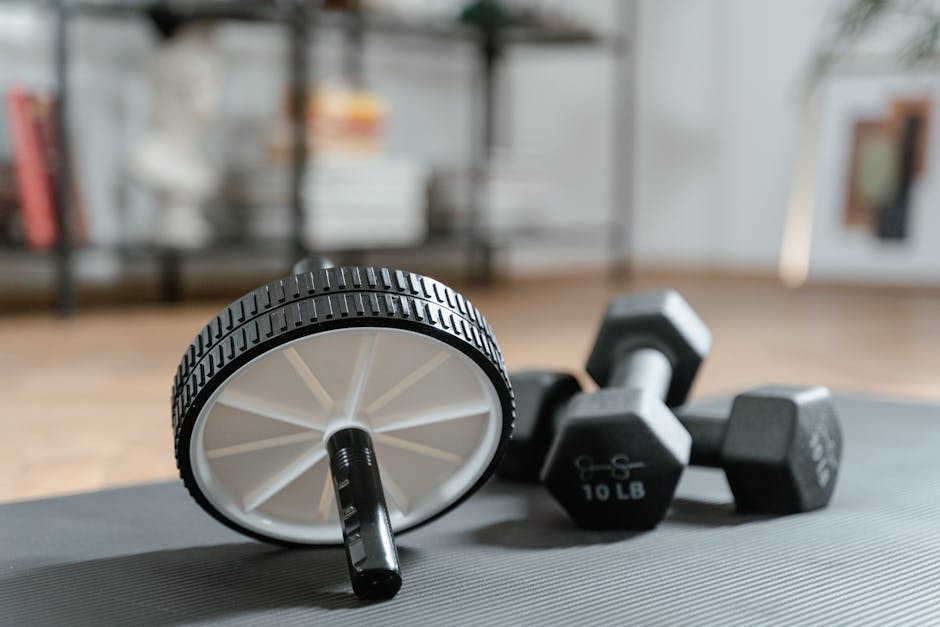
To get started, we recommend:
- A pair of dumbbells: Preferably adjustable (more on that below).
- A flat surface: A weight bench is ideal, but a firm floor or a sturdy ottoman can work for many moves.
- A mat: To protect your floors and your joints during floor-based exercises.
Choosing the Right Weight
The “right” weight depends on your goals, but for most people following an at home workout plan with dumbbells, we aim for a weight that allows for 8-12 repetitions. This is the “sweet spot” for hypertrophy (muscle building). If you can easily do 15 reps with perfect form, it’s time to go heavier. If you can’t reach 6 reps without your form breaking down, the weight is too heavy.
For more tips on selecting gear, see our guide on affordable dumbbells for your home.
Space-Saving Solutions
If you live in a small apartment, you might worry about a rack of dumbbells taking over your living room. This is where adjustable dumbbells shine. One pair can replace 15 sets of fixed weights, saving massive amounts of space. Similarly, you might consider why adjustable kettlebells are great for home use as a supplemental tool for dynamic movements.
| Feature | Fixed Dumbbells | Adjustable Dumbbells |
|---|---|---|
| Space Needed | High (requires a rack) | Low (one pair fits under a bed) |
| Durability | Very High | Moderate to High |
| Cost | Low per pair / High for a set | Higher upfront / Lower for the “set” |
| Speed of Change | Instant (just grab another) | 2–5 seconds |
The 12-Week Beginner At Home Workout Plan with Dumbbells
Consistency beats intensity every single time. To see real changes in your physique, you need a structured approach. We recommend a 3-day full-body split (e.g., Monday, Wednesday, Friday) to allow for adequate recovery. This frequency is perfect for simple exercise routines for weight loss at home.
Phase 1: Building the Foundation (Weeks 1-4)
The goal of the first month isn’t to lift the heaviest weight possible; it’s to master the movements. We focus on mind-muscle connection—actually feeling the target muscle work.
- Focus: Form over weight.
- Reps: 10-12 per set.
- Rest: 90 seconds.
- Why: This prepares your tendons and nervous system for heavier loads later. Check out easy-to-follow beginner home workouts for weight loss for more foundational movements.
Phase 2: Increasing Intensity and Strength (Weeks 5-12)
Now that your form is solid, it’s time to turn up the heat. We apply progressive overload by either increasing the weight, adding an extra set, or shortening the rest periods. Even a 10-minute daily workout routine for beginners can be made intense by increasing the “work-to-rest” ratio.
Sample Full-Body Routine and Weekly Schedule
A full-body routine is the most efficient way to train at home. It ensures that every major muscle group is stimulated frequently, which is the key to muscle density and metabolic health.
A Complete Full-Body At Home Workout Plan with Dumbbells
Perform this circuit 3 times, resting 60-90 seconds between exercises.
- Goblet Squats: 3 sets of 10-12 reps. (Quads, Glutes)
- Dumbbell Bench Press (or Floor Press): 3 sets of 8-10 reps. (Chest, Triceps)
- One-Arm Dumbbell Rows: 3 sets of 10-12 reps per side. (Back, Biceps)
- Overhead Press: 3 sets of 10 reps. (Shoulders)
- Dumbbell Romanian Deadlifts: 3 sets of 12 reps. (Hamstrings, Lower Back)
This routine targets all the major “movers” in the body. If you’re short on time, you can even condense this into the fast 10-minute routine for busy humans.
Adding Core and Cardio Elements
To maximize fat loss and heart health, we like to sprinkle in “finishers.” After your strength work, try 3 rounds of:
- Plank Jacks: 30 seconds.
- Dumbbell Burpees: 10 reps (be careful with your wrists!).
- Mountain Climbers: 30 seconds.
If you enjoy variety, incorporating jump rope workouts for beginners on your “off” days is a fantastic way to boost cardiovascular endurance without losing muscle.
Mastering Progression and Troubleshooting
What happens when your weights start to feel easy? This is where many people plateau. To keep seeing results, you must apply progressive overload. This doesn’t always mean buying heavier dumbbells. You can also use tempo control—slowing down the “eccentric” (lowering) phase of the lift to 3 or 4 seconds. This increases the “time under tension,” making a light weight feel much heavier.
You can also supplement your weights with bands. Our beginner resistance band guide explains how to layer resistance for a more challenging workout.
What to Do if Weights Are Too Light
If you’ve maxed out your adjustable dumbbells, don’t worry. You can:
- Add a pause: Hold the bottom of a squat or the top of a row for 2 seconds.
- Increase volume: Move from 3 sets to 4 or 5 sets.
- Use 1.5 reps: Go all the way down, halfway up, back down, then all the way up. That’s one rep.
- Bands: Wrap a band around your back during push-ups or under your feet during rows. See the beginners guide to resistance bands for more ideas.
Nutrition and Recovery for Results
You don’t build muscle during the workout; you build it while you sleep.
- Protein: Aim for roughly 0.7 to 1 gram of protein per pound of body weight to support muscle repair.
- Sleep: 7-9 hours is the gold standard for hormonal health and recovery.
- Hydration: Muscles are roughly 75% water. Even slight dehydration can sap your strength by 10% or more.
- Caloric Surplus: If your goal is maximum muscle growth, you need to eat slightly more calories than you burn. If fat loss is the goal, a small deficit is necessary.
Frequently Asked Questions about Dumbbell Training
Can I build significant muscle with only dumbbells?
Absolutely. Hypertrophy is driven by mechanical tension and metabolic stress. As long as you are training with high intensity (getting close to “failure” on your sets) and applying progressive overload, your muscles will grow. Dumbbells are often better for “mind-muscle connection” than barbells, which can actually lead to better growth for some individuals.
How many days per week should I train?
For most people, 3 to 4 days per week is the sweet spot. This allows for a 48-hour recovery window between sessions for specific muscle groups. If you prefer a 5-day split (focusing on different body parts each day), that works too, provided you listen to your body and avoid overtraining.
How long should a typical home dumbbell workout take?
An efficient at home workout plan with dumbbells should take between 25 and 45 minutes. If you find yourself training for over an hour, you might be resting too long between sets or doing too many “fluff” exercises. Focus on the big compound movements first.
Conclusion
At NextFin Capital, we believe that fitness should be accessible, sustainable, and effective. You don’t need a fancy club membership to transform your body; you just need a plan and the discipline to stick to it. By following a structured at home workout plan with dumbbells, you are investing in your long-term health and functional strength.
Start today by mastering the basics, tracking your progress, and staying consistent. Your future self will thank you for the work you put in today.
Ready to take the next step? Explore our comprehensive library of workout routines to find the perfect plan for your fitness journey.
