
You Don’t Need a Gym to Build a Strong Chest and Arms
An at home chest and arm workout can build real muscle and upper body strength — no gym membership required. Here’s a quick overview of what works:
Best at-home chest and arm exercises:
- Push-ups (standard, incline, decline, diamond) — targets chest and triceps
- Tricep dips using a sturdy chair — isolates the back of the arm
- Floor chest press with dumbbells — focuses tension on the pecs
- Bicep curls with dumbbells or resistance bands — builds the front of the arm
- Close-grip push-ups — hits triceps and inner chest
Quick routine guidelines:
- Train 2-3 times per week
- Aim for 3-4 sets of 8-15 reps per exercise
- Rest 60-90 seconds between sets
Most people assume building chest and arm strength requires a bench press, cables, or a rack of barbells. That assumption keeps a lot of busy people stuck.
The reality? Your chest, triceps, and biceps respond to tension and volume — not to expensive machines. Whether you have 25 minutes before work or a spare corner in your living room, effective training is within reach.
Strength and muscle mass start declining around age 35. Upper body training isn’t just about how you look — it’s about staying mobile, functional, and strong for everyday life. Pushing open a heavy door, lifting groceries, getting up off the floor — all of these rely on the same muscles you’ll train here.
This guide breaks down everything you need: the right exercises, how to structure your sessions, and how to keep progressing over time.
Essential Equipment for Your At Home Chest and Arm Workout
One of the greatest myths in fitness is that you need a commercial gym membership to see results. In reality, your muscles don’t know if you’re in a high-end health club or your pajamas in the living room; they only know resistance. For a truly effective at home chest and arm workout, you can start with absolutely nothing but your own bodyweight.
However, as you get stronger, adding a few tools can help you maintain progressive overload—the process of gradually increasing the stress placed on the body during exercise.
The Bare Essentials
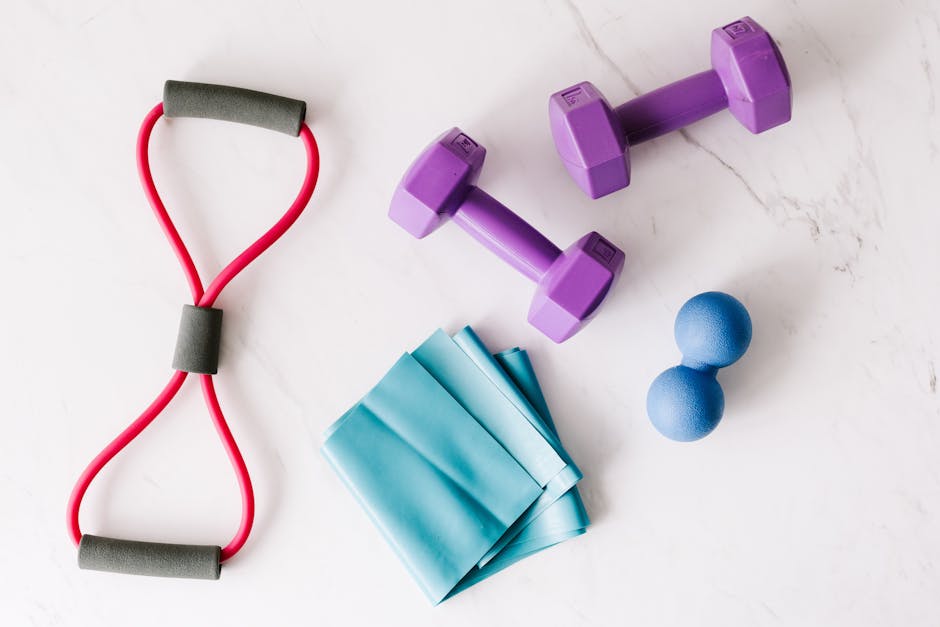
- Bodyweight: Your own mass is your primary tool. By changing the angle of your body, you can shift the focus from your lower chest to your upper chest or increase the load on your triceps.
- Resistance Bands: These are the ultimate “gym in a pocket.” They provide linear variable resistance, meaning the move gets harder as you reach the peak of the contraction. If you’re new to these, check out our beginner resistance band guide to learn the ropes.
- Dumbbells: If you have the space, a set of affordable dumbbells for your home is a game-changer for isolation moves like bicep curls and chest flies.
Household Hacks
If you aren’t ready to invest in gear yet, look around your house. A sturdy kitchen chair is perfect for tricep dips. A backpack filled with books can serve as a weighted vest for push-ups. Even large water jugs or laundry detergent bottles can act as makeshift weights for curls. When you are ready to get serious, setting up your first home gym doesn’t have to be expensive or take up a whole room.
Mastering the Push-Up for an Effective At Home Chest and Arm Workout
The push-up is the undisputed king of bodyweight chest exercises. It engages the pectorals, deltoids (shoulders), and triceps, while requiring significant core stability. To get the most out of your at home chest and arm workout, form is everything.
- Elbow Positioning: A common mistake is flaring the elbows out at a 90-degree angle like the letter “T.” This puts immense pressure on the shoulder joints. Instead, tuck your elbows to about a 45-degree angle from your torso.
- Scapular Control: Think about “pinching” your shoulder blades together as you lower yourself and spreading them apart as you push up.
- Core Engagement: Squeeze your glutes and brace your abs. Your body should move as one solid plank from your head to your heels.
If a standard push-up is too difficult, don’t sweat it. Start with incline push-ups by placing your hands on a elevated surface like a couch or table. As you get stronger, move to lower surfaces until you’re on the floor. For those looking for a specific At Home Chest and Tricep Workout for Upper Body Strength, focusing on these form cues is the fastest way to see progress.
Bicep Variations in Your At Home Chest and Arm Workout
While the chest and triceps handle the “pushing,” the biceps are responsible for the “pulling” and curling. You can’t have a complete arm routine without them.
- Mind-Muscle Connection: Because the biceps are a smaller muscle group, it’s easy for other muscles to take over. Focus on squeezing the bicep at the top of every rep.
- Tempo Control: Don’t just swing the weights. Try a “3-second down” rule. Lowering the weight slowly (the eccentric phase) creates micro-tears in the muscle that lead to growth.
- Unilateral Training: Perform curls one arm at a time. This helps identify and fix muscle imbalances where one arm might be stronger than the other.
If you don’t have dumbbells, use a resistance band. Step on one end and curl the other. The constant tension is fantastic for building that “peak” on the bicep.
Effective Exercises for Chest and Tricep Definition
To get that defined, “sculpted” look, you need to hit the muscles from different angles. This ensures all heads of the triceps and all sections of the pectoral muscles are stimulated.
Target: The Triceps (The Back of the Arm)
The triceps actually make up about two-thirds of your upper arm mass. If you want bigger arms, focus here!
- Tricep Dips: Sit on the edge of a sturdy chair, hands next to your hips. Slide off and lower your hips toward the floor by bending your elbows to 90 degrees, then push back up. Keep your back close to the chair to protect your shoulders.
- Diamond Push-ups: Place your hands together under your chest so your index fingers and thumbs form a diamond shape. This narrow grip shifts the load almost entirely to your triceps.
- Bodyweight Skull Crushers: Find a waist-high surface (like a table or sturdy banister). Lean forward, gripping the edge, and lower your forehead toward your hands by bending only at the elbows. Push back to the start.
Target: The Chest (Pectorals)
- Floor Chest Press: If you have dumbbells but no bench, lie on the floor. This actually protects your shoulders by preventing your elbows from dipping too low, allowing you to focus purely on the squeeze of the chest.
- Decline Push-ups: Put your feet up on a chair or couch and your hands on the floor. This shifts the weight to your upper chest and shoulders, helping build that “shelf” look.
Muscle Activation by Angle
Research shows that simply changing your hand or foot position changes which muscle fibers do the heavy lifting.
| Exercise Type | Primary Target | Difficulty Level |
|---|---|---|
| Incline Push-up | Lower Chest | Beginner |
| Standard Push-up | Mid Chest | Intermediate |
| Decline Push-up | Upper Chest / Shoulders | Advanced |
| Diamond Push-up | Triceps / Inner Chest | Advanced |
For those living in smaller spaces, choosing compact gym equipment for apartment living like adjustable kettlebells or door-frame pull-up bars can help facilitate these variations without cluttering your home.
Structuring Your Routine for Maximum Growth
Knowing the exercises is only half the battle. To see results from an at home chest and arm workout, you need a plan. You can’t just do ten push-ups whenever you feel like it and expect to look like a superhero.
Frequency and Volume
- The 2-Day Rule: Research suggests that training a muscle group at least twice a week is superior for growth compared to once a week.
- Set Targets: Aim for 8 to 15 total sets per muscle group per week. For example, if you do 4 sets of push-ups and 4 sets of dips on Monday, and repeat that on Thursday, you’ve hit 16 sets for the week—perfect for hypertrophy.
- Rep Ranges: For building size, stay in the 8-15 rep range. If you can easily do more than 15 reps, it’s time to make the exercise harder (e.g., move from regular push-ups to decline push-ups).
The Secret Sauce: Progressive Overload
Since you don’t have a gym full of heavier weights, you have to get creative to keep getting stronger. Use these techniques:
- 3-1-1 Tempo: Take 3 seconds to lower yourself, pause for 1 second at the bottom, and explode up in 1 second. This increases “Time Under Tension.”
- Shorten Rest Intervals: Instead of resting for 2 minutes, rest for 45-60 seconds. This forces your muscles to recover faster.
- Drop Sets: This is a proven muscle-builder. Do a set of standard push-ups until you can’t do any more, then immediately drop to your knees and do as many more as possible. Statistics show drop sets can lead to nearly double the muscle growth of traditional sets in less time!
If you’re just starting out, a 10-minute daily workout routine for beginners is a great way to build the habit before moving into these high-volume chest and arm sessions.
Nutrition and Recovery Strategies for Home Athletes
Your muscles don’t actually grow while you’re working out; they grow while you’re resting. If you don’t fuel the fire and let the embers cool, you won’t see the gains you’re working so hard for.
The Protein Powerhouse
Protein provides the amino acids necessary to repair the micro-tears caused by your at home chest and arm workout.
- The Goal: Aim for 0.7 to 1.0 grams of protein per pound of bodyweight. If you weigh 160 lbs, that’s roughly 112-160 grams of protein daily.
- Sources: Chicken, fish, tofu, beans, and Greek yogurt are excellent staples.
Sleep and Hydration
- Sleep: Aim for 7-9 hours of quality shut-eye. This is when your body releases growth hormones.
- Hydration: Muscles are about 75% water. Even slight dehydration can lead to a significant drop in strength and increased muscle soreness.
Managing Recovery
It’s normal to feel Delayed Onset Muscle Soreness (DOMS) a day or two after a tough session. To manage this:
- Warm-up: Spend 5-7 minutes doing arm circles, torso twists, and “cat-cow” stretches to get the blood flowing.
- Active Recovery: On your off days, go for a walk or do some light yoga. This keeps the blood moving through the sore muscles without adding more stress.
Frequently Asked Questions about Home Training
Can I build significant muscle with just bodyweight?
Absolutely. The key is intensity. If you perform exercises with enough volume and take your sets close to “failure” (the point where you can’t do another rep with good form), your body will adapt by building muscle. Using variations like archer push-ups or one-arm kitchen counter push-ups can provide enough resistance to challenge even advanced athletes.
How often should I train my chest and arms?
For optimal results, aim for 2 to 3 sessions per week. Your muscles need about 48 hours to recover between high-intensity sessions. A great split is Monday, Wednesday, and Friday, leaving the weekends for rest or cardio.
What are the best beginner modifications for push-ups?
If standard push-ups are too hard, start with Wall Push-ups (standing and pushing against a wall). Once those are easy, move to Incline Push-ups (hands on a table or couch). The higher the surface, the easier the move. Gradually lower the surface until you are flat on the floor.
Conclusion
Building a powerful upper body doesn’t require a commute to a crowded gym or a monthly membership fee. By mastering the fundamentals of the at home chest and arm workout, staying consistent with your routine, and fueling your body correctly, you can achieve professional-level results from the comfort of your living room.
At NextFin Capital, we believe that health is the ultimate wealth. Strengthening your chest and arms isn’t just about the mirror—it’s about functional strength that improves your quality of life, protects your mobility as you age, and boosts your daily energy levels.
Consistency is the only “magic pill” in fitness. Start today, even if it’s just one set of push-ups during a commercial break. Your future self will thank you for the strength you build today. Ready to take the next step in your fitness journey? Explore more expert workout routines to keep your progress moving forward.
