
Your Core, Stronger in 30 Minutes — No Gym Required
A 30 minute ab workout no equipment is one of the most effective ways to build real core strength at home — no gym membership, no gear, no commute.
Here’s what a solid 30-minute no-equipment ab workout looks like:
- Warm up (5 minutes) — Deadbugs, bird dogs, shoulder taps
- Circuit 1 (8 minutes) — Scissor kicks, V-sits, Russian twists, reverse crunches
- Circuit 2 (8 minutes) — Bicycle crunches, side planks (left + right), mountain climbers
- Circuit 3 (8 minutes) — Plank variations, hollow holds, leg raises
- Rest periods — 15 seconds between exercises, 1 minute between rounds
- Cool down (1 minute) — Light stretching
The format: 45 seconds of work, 15 seconds of rest. Repeat each circuit twice.
Most people think core training means endless crunches or holding a plank until they want to cry. But your core is far more than your six-pack muscles. It’s the foundation of almost every movement your body makes — from picking up groceries to running a 5K.
The good news? You don’t need a single piece of equipment to train it effectively. All you need is 30 minutes and enough floor space to lie down.
This guide walks you through exactly how to structure your workout, which exercises to do, and how to get real results — even on a packed schedule.

Why Core Strength Matters Beyond a Six-Pack
When we talk about a 30 minute ab workout no equipment, it’s easy to get hyper-focused on the “six-pack.” However, the aesthetic “bricks” are only one small part of a complex system. A truly functional core is made up of several layers of muscle that work in tandem to protect your spine and power your movements.
- Rectus Abdominis: These are the “six-pack” muscles. Their primary job is to flex the spine (think crunching forward).
- Transverse Abdominis (TVA): Often called the “corset muscle,” this is the deepest layer of your core. It wraps around your midsection, stabilizing the spine and pelvis. Strengthening the TVA is one of the best ways to alleviate lower back pain.
- External and Internal Obliques: Located on the sides of your torso, these muscles allow you to twist and bend sideways. They are essential for rotational power and maintaining a narrow waistline.
- Erector Spinae: These muscles in your lower back are frequently neglected in “ab” workouts, but they are vital for posture and spinal support.
Beyond looking great at the beach, a strong core improves your balance and stability. Whether you are carrying a heavy suitcase or walking on uneven ground, your core is what keeps you upright. By incorporating various Workout Routines, you can ensure you’re hitting all these groups for total-body injury prevention.
Mastering the 30 Minute Ab Workout No Equipment Structure
To get the most out of your time, you can’t just go through the motions. Effectiveness comes down to two things: structure and engagement.
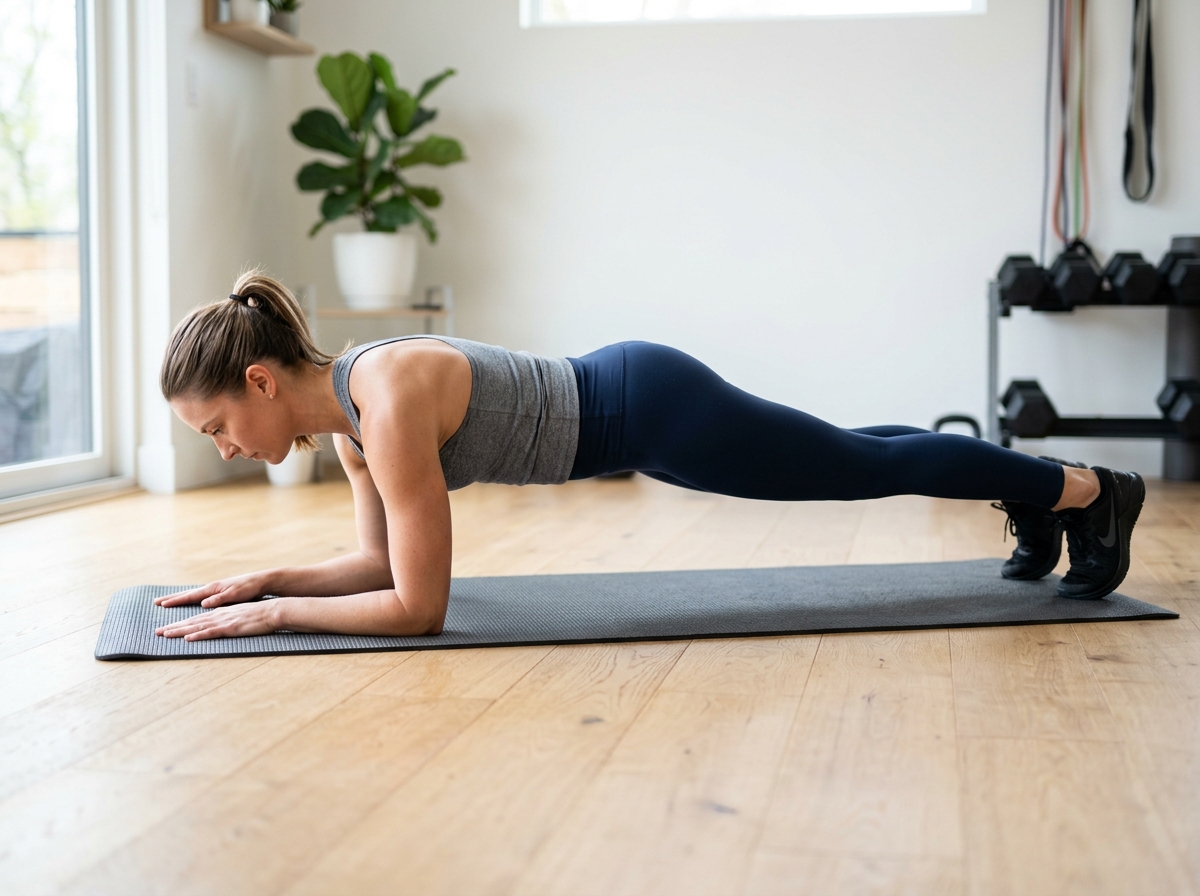
Core Engagement: The “Punch” Technique
Before you lift a leg or hold a plank, you must learn to engage. We often tell our clients to imagine someone is about to punch them in the gut. You naturally “brace” by pulling your belly button toward your spine and tightening your midsection. This isn’t the same as sucking your breath in; you should still be able to breathe while maintaining this tension. This bracing technique protects your lower back and ensures the target muscles are doing the heavy lifting.
The Workout Structure
A 30-minute session allows for a high-volume, high-intensity circuit. We recommend a “45/15” split: 45 seconds of high-quality movement followed by 15 seconds of rest. This keeps the heart rate elevated while providing just enough recovery to maintain form.
If you are just starting out, check out our Home Workouts for Beginners: A Comprehensive Guide for more tips on easing into a routine.
The Essential Warm-Up (5 Minutes)
Never skip the warm-up. It increases mobility and “wakes up” the nerves connecting your brain to your muscles.
- Deadbugs: 12 reps per side. Focus on keeping your lower back pressed firmly into the floor.
- Bird Dogs: 12 reps per side. This targets the posterior chain and deep stabilizers.
- Shoulder Taps: 24 total. From a high plank position, tap your opposite shoulder without letting your hips rock side to side.
Essential Exercises for Your 30 Minute Ab Workout No Equipment
To ensure a comprehensive burn, we’ve selected exercises that target every “zone” of the core.
The “Upper & Lower” Burners
- Scissor Kicks: Lie on your back with hands under your glutes. Lift your legs and flutter them over each other. This is a premier move for the lower rectus abdominis.
- V-Sits: Sit on the floor, lift your legs to a 45-degree angle, and reach for your shins. This requires massive stability and hits the entire frontal wall.
- Reverse Crunches: Instead of moving your shoulders, you move your hips toward your chest. This targets the lower abs without straining the neck.
The Rotational & Lateral Powerhouses
- Russian Twists: Sit with knees bent and feet slightly off the ground. Twist your torso from side to side. To make it harder, slow down the movement.
- Side Planks: Hold for 45 seconds on each side. This targets the obliques and the deep transverse abdominis. If your hips drop, the exercise loses its value—keep that straight line!
- Bicycle Crunches: The gold standard for oblique activation. Ensure you are bringing your shoulder to your knee, not just your elbow.
The Dynamic Finishers
- Mountain Climbers: These add a cardio element while forcing the core to stabilize against rapid leg movement.
- Plank Rocks: From a forearm plank, shift your weight forward onto your toes and then back. It sounds simple, but after 30 seconds, your abs will be screaming.
Progressions and Modifications for a 30 Minute Ab Workout No Equipment
The beauty of a 30 minute ab workout no equipment is that it is infinitely scalable. Whether you are a total novice or a seasoned athlete, you can adjust the difficulty.
For Beginners
If 30 minutes feels daunting, start with one round of the circuits (about 10-15 minutes total). You can also modify specific moves:
- Planks: Drop to your knees while maintaining a straight line from head to knees.
- Leg Raises: Bend your knees instead of keeping them straight to reduce the lever length and pressure on your lower back.
- Deadbugs: Keep your feet on the floor and only move your arms until you build the strength to move both.
Consistency is more important than intensity in the beginning. Use our guide on Creating a Home Fitness Schedule to find a rhythm that works for you.
For Advanced Users
If the basic moves feel too easy, don’t just add more reps—increase the “Time Under Tension” (TUT).
- Isometric Holds: At the most difficult part of a move (like the bottom of a leg raise), hold for 3-5 seconds.
- Tempo Control: Take 3 seconds to lower your legs and 1 second to bring them up.
- Hollow Holds: Transition from a V-sit into a hollow body hold (arms and legs extended, only the lower back touching the floor) and hold for the full 45 seconds.
If you find yourself losing steam, Unlocking Home Workout Motivation can help you push through those final, difficult sets.
The Role of Diet and Body Fat in Visible Abs
We have to be honest: you can have the strongest core in the world, but if it’s hidden under a layer of adipose tissue, you won’t see a “six-pack.” As the saying goes, “Abs are made in the gym but revealed in the kitchen.”
Visible abs are primarily a function of body fat percentage. While everyone’s body is different, the industry standards for visibility are quite specific.
Body Fat Percentage Requirements
| Gender | Visible Abs Range | Athletic/Fitness Range |
|---|---|---|
| Women | 14% – 19% | 20% – 24% |
| Men | 6% – 13% | 14% – 17% |
To reach these levels safely, we recommend a sustainable approach. Aiming to lose about 1-2% of body fat per month is a healthy target that allows you to maintain muscle mass while leaning out. This usually requires a slight caloric deficit paired with high-protein intake. For those focused on shedding weight while toning, our resource on Getting Started with Home Workouts for Weight Loss is an excellent place to start.
Common Mistakes and Safety Tips
Even a “simple” 30 minute ab workout no equipment can lead to injury if performed with poor form. Here are the most common pitfalls we see:
- Neck Strain: During crunches, many people pull on their heads. This strains the cervical spine. Instead, imagine holding an orange between your chin and your chest, and use your abs to lift your shoulders—not your hands.
- Arching the Back: During leg raises or scissor kicks, if your lower back arches off the floor, your hip flexors have taken over and your spine is at risk. If you can’t keep your back flat, don’t lower your legs as far.
- Holding Your Breath: Your muscles need oxygen to perform. Exhale on the exertion (the “crunch” or “lift”) and inhale on the return.
- Hip Flexor Dominance: If you feel the front of your thighs burning more than your stomach, you are likely using your hip flexors. Focus on “tucking” your pelvis to re-engage the abs.
- Overtraining: More is not always better. Your abs are muscles like any other; they need rest to grow and strengthen.
If you struggle with consistency or form, following these Beginner Tips to Stick to Exercise Routine at Home can help you stay safe and focused.
Frequently Asked Questions about Core Training
Is it OK to do ab workouts daily?
While the core is resilient, we don’t recommend doing a full 30 minute ab workout no equipment every single day. Like your biceps or chest, your abdominal muscles need time to repair the micro-tears caused by exercise. Training them 4-5 days a week is usually the “sweet spot” for most people. On off days, focus on active recovery like walking or light stretching. For a broader look at balancing your week, see The Ultimate Guide to Beginner Home Workouts.
Does walking strengthen your core?
Yes! Walking is a functional movement that requires your trunk stabilizers to keep you upright. You can increase the core demand by walking on uneven terrain (like hiking trails) or by consciously engaging your core as you walk. It won’t give you a “six-pack” on its own, but it is a fantastic supplemental activity for core endurance.
How long does it take to see results?
Strength results happen quickly—you’ll likely feel “sturdier” and notice better posture within 2 to 3 weeks. Aesthetic results take longer and depend heavily on your starting body fat percentage. If you are consistent with your 30-minute routine and follow a balanced diet, you can expect to see significant changes in definition within 8 to 12 weeks.
Conclusion
Building a strong, functional midsection doesn’t require expensive machines or hours at the gym. By committing to a 30 minute ab workout no equipment, you are investing in your long-term health, spinal safety, and athletic performance.
At NextFin Capital, we believe that fitness should be accessible to everyone, regardless of their gear or location. Start with the warm-up, focus on your bracing technique, and remember that consistency beats intensity every time.
Ready to take your fitness to the next level? Explore our full library of Workout Routines for more expert-led guides and home-friendly exercises.
